SobellLogo3
  • News
  • Instruments
    • 40th Anniversary Model Guitars
    • Flat Top Guitars
      • Steinbeck Model Guitar
      • Martin Simpson Signature Model
      • New World Guitar
      • Model 4 Dreadnought
      • D Guitar
      • Verona Guitar
    • Arch Top Guitars
      • 6 String Arch-Top guitar
      • Twelve string Arch-top
    • Citterns and octave mandolins
    • Mandolins & Mandola
  • Construction and Design
    • Wood
  • Available now
  • About Us
    • Contact
    • How I started: my first cittern
  • Things they say
  • Order
  • Tonewood for sale
    • Indian rosewood for sale
    • Brazilian rosewood for sale
18 Feb2016

Jonathan Moss and the Steinbeck guitar

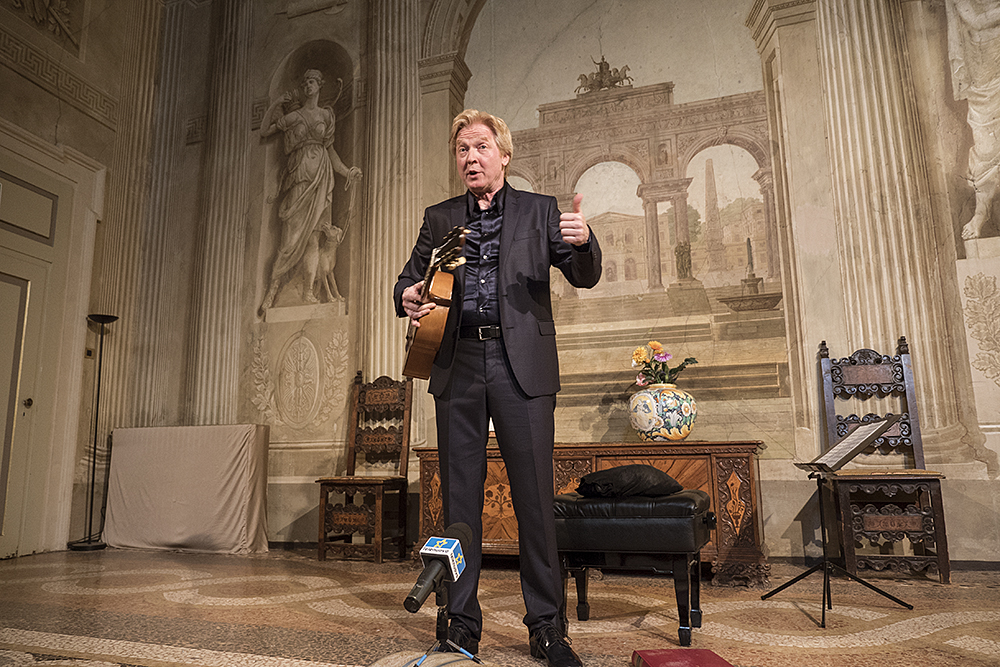
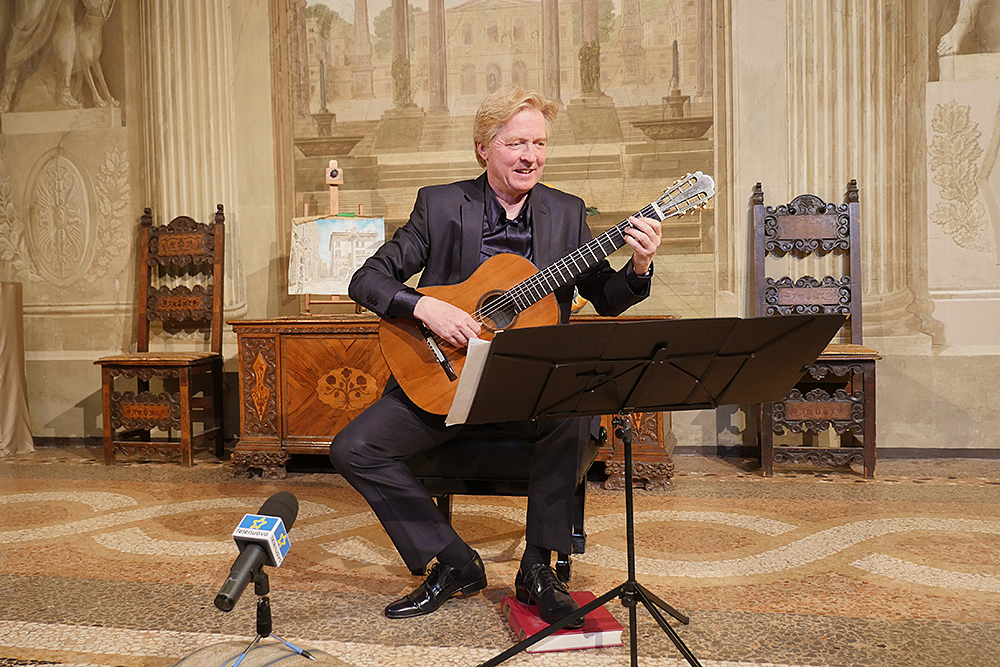
Jonathan Moss and his family visited over the weekend to pick up his new ‘Steinbeck’ guitar – so named by Paul Hostetter, referring to a passage in John Steinbeck’s ‘Grapes of Wrath’.  Jonathan is an outstanding guitarist.


Summer photo ps 1200 c

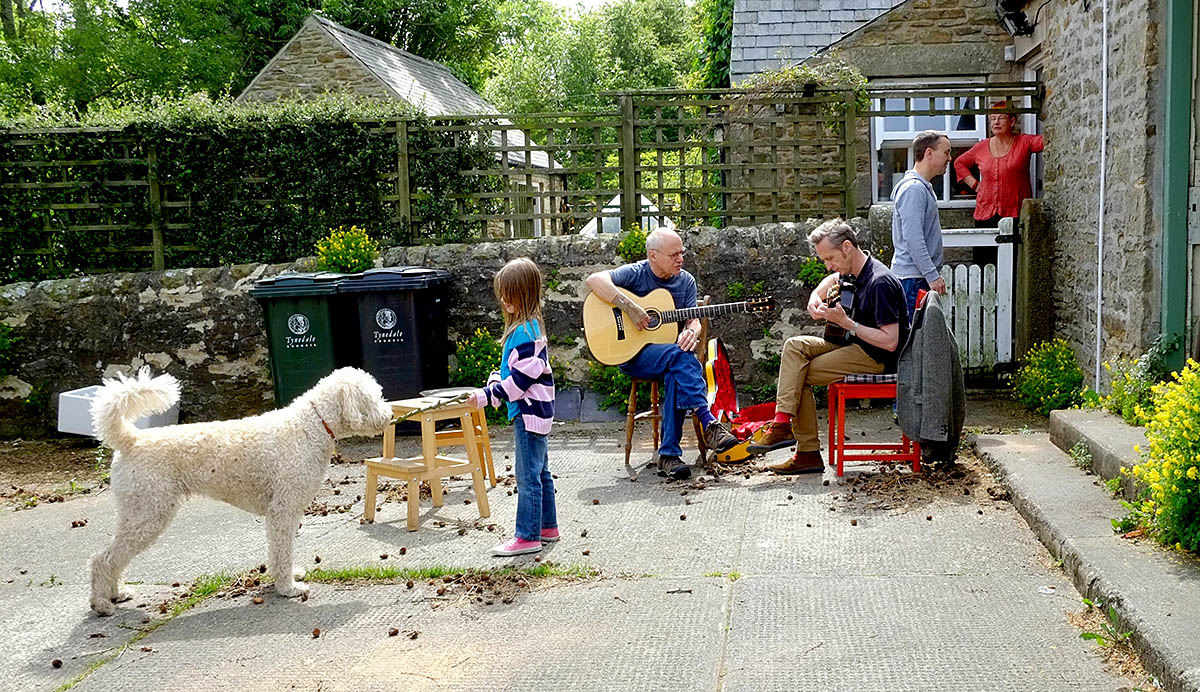
Jonathan visited in the summer and played Paul’s guitar, after which he decided to sell his MS model and have me build him a Steinbeck.  Here we are in my workshop yard; I’m holding Jonathan’s MS model, he is playing Paul’s Steinbeck, his daughter Emilie is tormenting my dog, and my son Jason is chatting with my neighbour Annie.  Jonathan’s son Louis took the photo.

Jonathan has sent me the following text.

In this golden age of luthiery  I’ve played guitars by some of the world’s most respected builders (Greenfield, Somogyi, Traugott, Olson etc). But I’ve now just bought my second guitar from Stefan Sobell, replacing the MS he built me ten years ago.

I visited Stefan to have my original MS guitar checked over, and on a balmy day in early August, kids and dogs playing around us, Stefan nonchalantly said “here, try this” and handed me one of the greatest guitars I’ve ever touched.  I couldn’t put the guitar down! Beautiful sounds seemed to just flow from my fingers with ease.  It was the guitar he’d built for Paul Hostetter, who called it the ‘Steinbeck’ model.

I’m a guitar player and not a collector – a guitar to me is a tool to express my music, and tone production is the most important thing.  It’s easy to be impressed by the initial loudness and bass response of a guitar, but on its own this doesn’t satisfy long-term; the subtle nuances, clarity and balance are what make a truly rewarding guitar. When played quietly, I want every note to be crystal clear and when played hard, I want it to seem as if the volume has simply been turned up, with no loss of definition – this makes a great guitar.  Stefan’s ‘Steinbeck’ model really does this.

What marks Stefan out as unique is his ability to create the most resonant thick trebles, especially when they are fretted around the twelfth fret, and what is magical about this latest guitar is that he’s augmented the bass frequencies to match. Lots of makers can create a deep thunderous bass, but the trebles usually disappoint – I want them to sing out above the harmonies and to be complemented by a full, dark, velvety bass, as on my new Sobell.

When I collected my new guitar we met at his home and there was an air of expectancy in the room when I first played it… of course I wasn’t disappointed. Stefan then played it, it’s very rare for a maker to be a top player, but once he’d finished some very accomplished noodling, he made me laugh when he said “I’ll build another if you don’t like it, that way I’ll get to play this one for longer!”. I’m sure he wasn’t joking.

P1600127 R4 1200 B

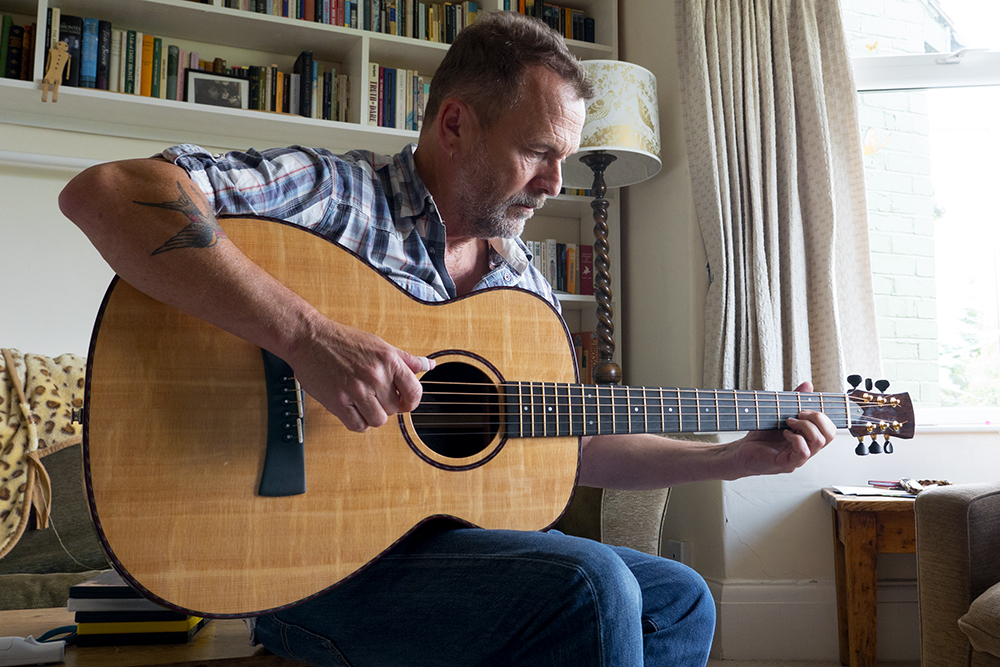
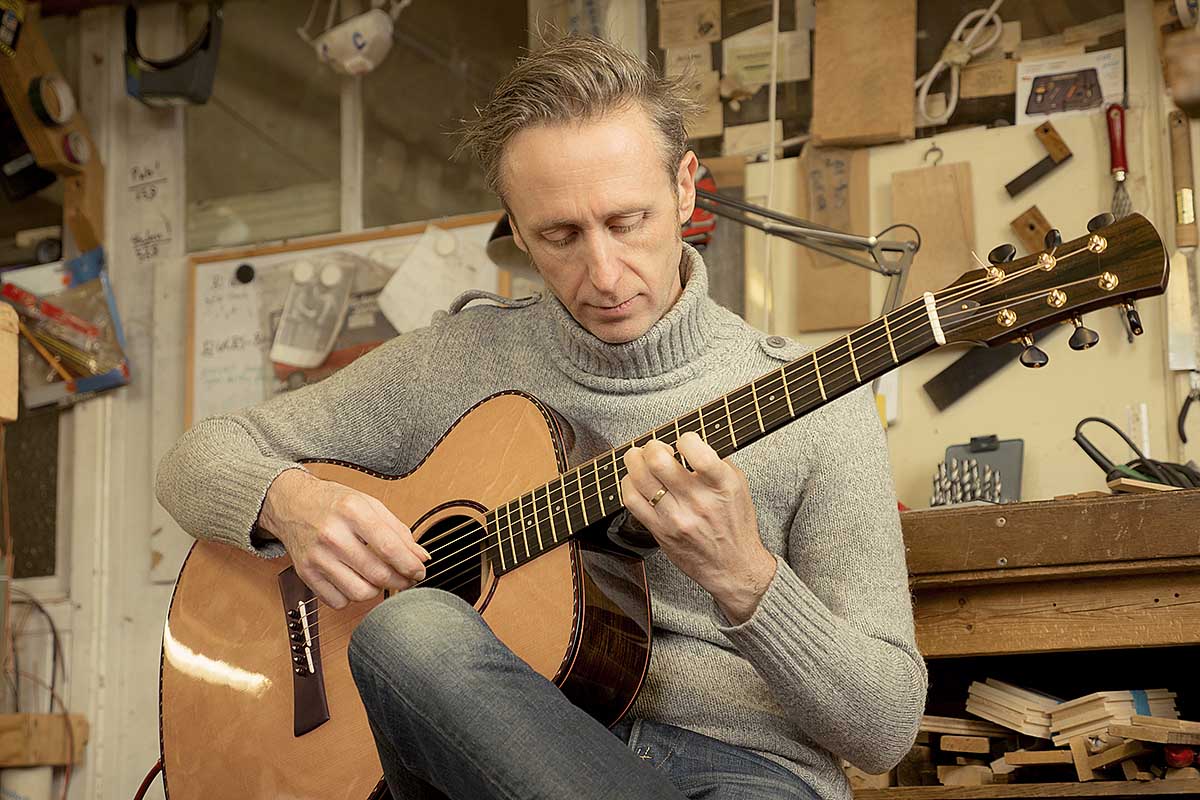
Jonathan playing his Steinbeck through the Highlander pickup.

18 Oct2015

American Luthier visits

Paul Hostetter
Paul with MS 600Photograph ©2015 Jim MacKenzie

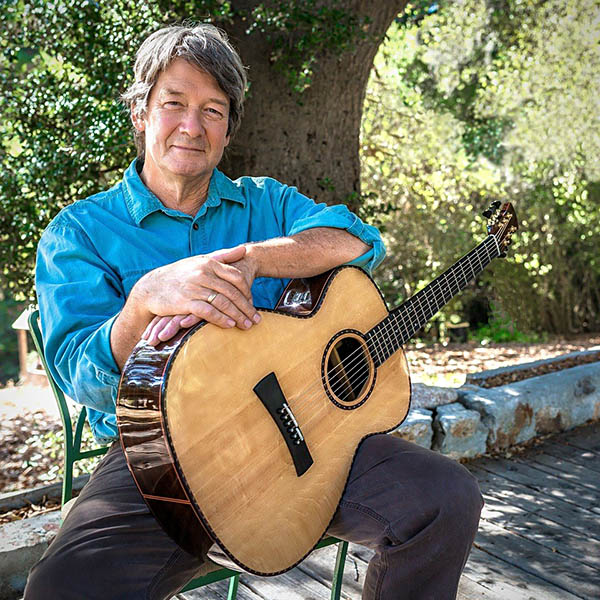
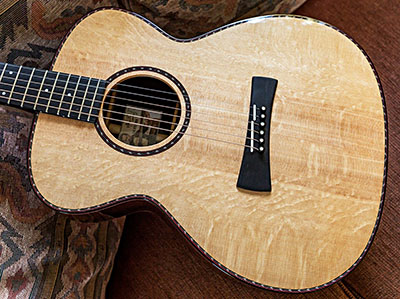
Just before my house move a few months ago, Californian luthier Paul Hostetter and his wife Robin visited. Paul bought one of my Model 1 Sicilian guitars around twenty years ago, and while he was here played my latest Blackwood and figured Sitka MS model.  He clearly liked it a lot, and a week or so later Robin called and asked to buy it.

Here is Paul with the MS in sunny California.  He pointed out that quite coincidentally the guitar that reminded me of John Steinbeck’s Grapes of Wrath (News 22 April) had come home to live in Steinbeck country.


Front 400Photograph ©2015 Jim MacKenzie

22 Apr2011

Another possible scam

I’ve just been asked about a used Model 1 currently advertised on Craigslist. The photos are genuine and are of the guitar advertised.

But the seller claims to be ‘Ann’ living on Shetland and to be the first owner. In fact the first owner was a Finn who tells me he sold the guitar to a man in Essex who tells me he still has the guitar, is very happy with it, has not advertised it and is not selling it.

In addition, the asking price is very low. Also, the guitar is advertised on the London Craigslist but is supposedly on Shetland, requiring a huge journey including a ferry crossing. Craigslist recommends buying locally to avoid scams. Clearly not possible in this case.

If whoever placed the ad cares to contact me and explain, I’ll pass on any information. In the meantime it’s a case of buyer beware.

30 Mar2011

Order book re-organisation

I am now re-organising my order book. Having lost some computer information in the past, if you have an instrument on order with me I’d be greatful if you would email me with your details. Thank you in advance.

On another note, spring is arriving and heather is burning on the moors around us. This clears the way for new heather shoots, these are food for grouse and pheasants. These days the fires are kept small so as not to get out of hand as sometimes happened in the past.

Burning heather on Kings Law in the upper Devilswater valley

24 Mar2011

Wengé as tonewood

I’ve been building Martin Simpson and New World model guitars with Wengé necks for a while now with great success. Wengé is stiff, light and resonant and beautiful when laquered. Wengé necked guitars have been amongst the best I’ve built, for example the Blackwood MS model I built for Darrell Scott (see my news item 6 September 2010).

Over the last couple of months I’ve also tried Wengé back and sides on guitars. The first was a New World and was a great success. It went to John Lynch in California who loves it, as did everyone else who saw and played it. The second is a Martin Simpson model which I am still evaluating and is quite as impressive as the New World.
The rich Wengé colour running along the length of the guitar from the back and sides to the neck and head is also very satisfying.

Both guitars have an impressive depth of sound, precise and clear without a hint of boominess. And an excellent bass/treble balance. I love them and am building more of both.


Martin Simpson playing new Wengé MS model

Both Wengé and African Blackwood, another great tonewood, sound a little different to Brazilian rosewood but neither better nor worse. Different woods suit different guitar designs, Wengé suits mine wonderfully.

While in theory it’s possible ship CITES legal Brazilian rosewood (as is mine) to the US, in practice no-one can find out how to do this. However, like African Blackwood, Wengé can be shipped to the US without problems, is fully acceptable under the US Lacey act, and looks and sounds wonderful.

12 Mar2011

12 String large bodied cittern

Today Joseph Sobol collected his 12 string large bodied cittern. With polite persistence he eventually pursuaded me to build it from Koa and Port Orford cedar, woods I haven’t used before. The lower four pairs are octave strung.


This combination of woods turned out to be an inspired choice. Although I could play nothing on so many strings, Joseph makes it sound wonderful, like a church organ. He’s a great player (and not just on cittern – he also plays his own beautiful Bach arrangements on steel string guitar).

Here am I with the cittern, photographed by Joseph. I’m not even trying to play it because all those strings look as confusing to me as a railway goods yard.
And if I’m looking puzzled, it’s because I’m wondering, how a man who can play instruments like he does can have such trouble pressing the shutter button on a camera?

For those curious as to how so many photographs could be taken in so short a time, I should point out that the wall clock had stopped. Either that or we took one photograph every twelve hours.

17 Jan2011

Possible scam warning

Franck Benoualid has contacted me with what he tells me is a scam warning. This concerns one of my guitars advertised on Craigslist.

See my ‘available now’ page for details

09 Nov2010

Large octave mandolins and citterns

After far too long, I am finally building large bodied citterns and octave mandolins again. Here is Darrell Scott playing his octave mandolin at his Blackfriars gig in Glasgow, a few minutes after taking delivery. Quite astonishing to me that he could take an unfamilar instrument from its case and accompany one of his own songs without a second’s rehearsal or sound-check. And make it sound not just good but also effortless.

Blackfriars in Glasgow is a tiny subterranean venue where you stand to see and hear the act. Tricky to get a picture of Darrell as the stage isn’t raised and there were five rows of tall men standing shoulder to shoulder in front of me. But Glaswegians are friendly and did their best to lean out of the way.

I’m now working on small and large mandolins and plan to be producing them soon. After them will come small bodied citterns.

06 Sep2010

Darrell Scott and Martin Simpson model guitar

Yesterday Darrell Scott took delivery of his Martin Simpson model guitar. Darrell is currently in Britain as a multi-instrumentalist member of Robert Plant’s ‘Band of Joy’ which tours the UK in October.

This guitar has African Blackwood back and sides, a German spruce soundboard, ebony fingerboard and bridge, a Wenge neck and a fitted Highlander pickup.

P1010197-ps-800

30 Jul2010

Binding


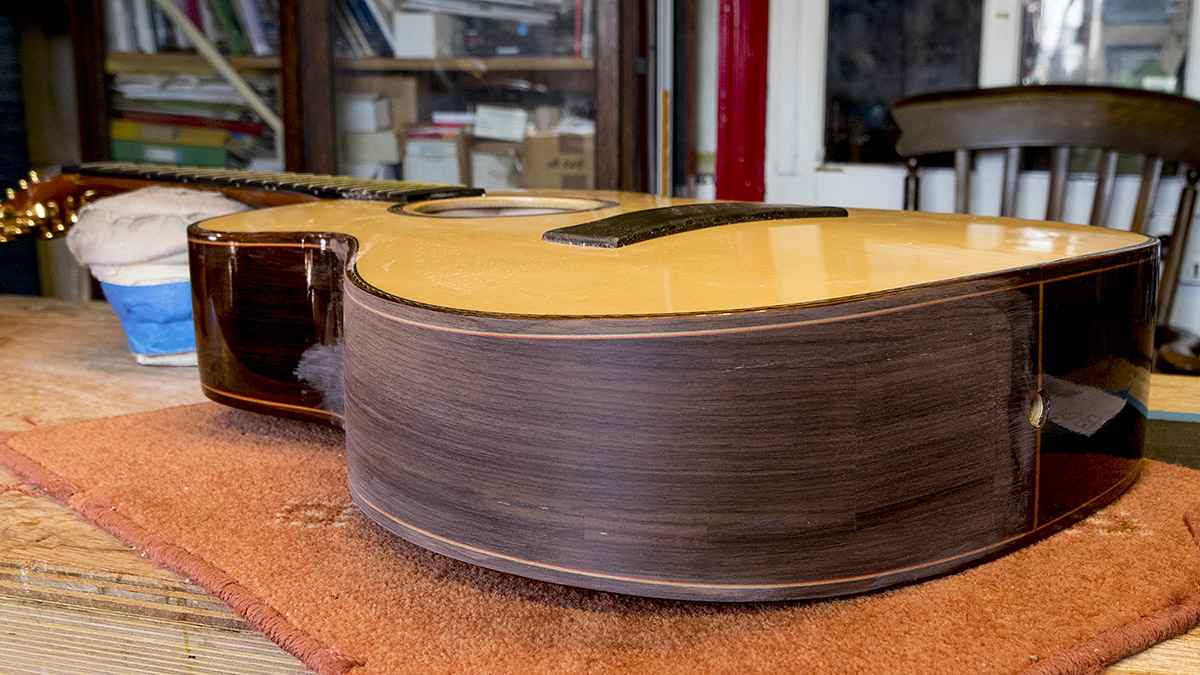
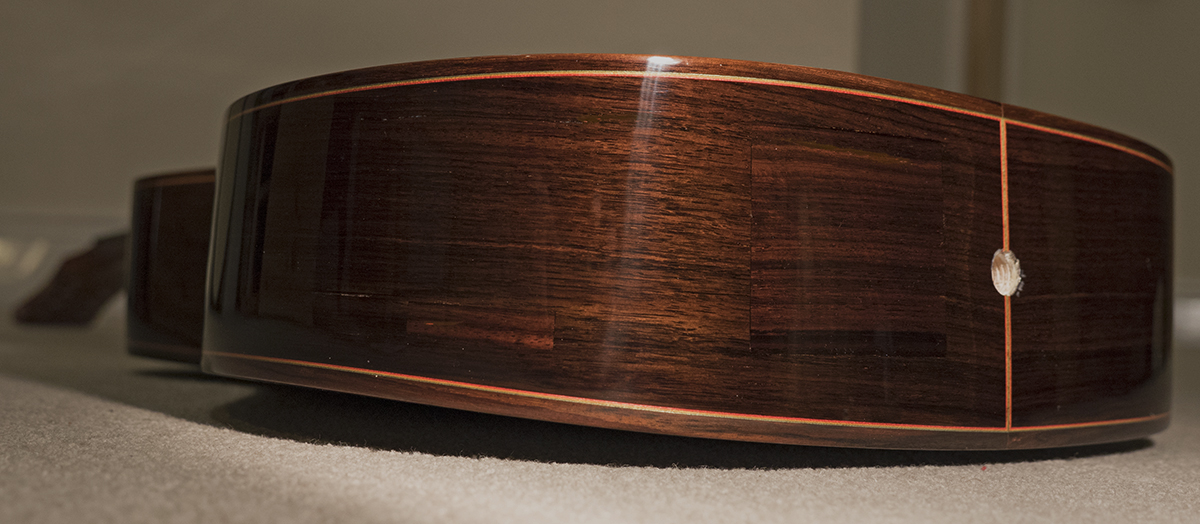
Here is the guitar in yesterday’s item with binding taped in place. The ebony binding on this MS model is shaped to the guitar before being fitted, but even so can resist being pulled into place. Hence the need for so much tape. Maple binding is more co-operative, and plastic binding is easier still to fit.

Because I don’t shellac the soundboard before taping the binding in place I’ll remove the tape carefully using a solvent to soften the adhesive.

When the tape is removed the binding stands proud and has excess glue around it. Next I’ll scrape and sand it flush with the body before scraping and sanding the back and sides. The shellac coating will help me see areas sanded and areas still requiring sanding.

The soundboard will be sanded smooth at a later stage.

  • 1
  • ...
  • 13
  • 14
  • 15
  • 16
  • ...
  • 18
  • News
  • Instruments
    • 40th Anniversary Model Guitars
    • Flat Top Guitars
      • Steinbeck Model Guitar
      • Martin Simpson Signature Model
      • New World Guitar
      • Model 4 Dreadnought
      • D Guitar
      • Verona Guitar
    • Arch Top Guitars
      • 6 String Arch-Top guitar
      • Twelve string Arch-top
    • Citterns and octave mandolins
    • Mandolins & Mandola
  • Construction and Design
    • Wood
  • Available now
  • About Us
    • Contact
    • How I started: my first cittern
  • Things they say
  • Order
  • Tonewood for sale
    • Indian rosewood for sale
    • Brazilian rosewood for sale