SobellLogo3
  • News
  • Instruments
    • 40th Anniversary Model Guitars
    • Flat Top Guitars
      • Steinbeck Model Guitar
      • Martin Simpson Signature Model
      • New World Guitar
      • Model 4 Dreadnought
      • D Guitar
      • Verona Guitar
    • Arch Top Guitars
      • 6 String Arch-Top guitar
      • Twelve string Arch-top
    • Citterns and octave mandolins
    • Mandolins & Mandola
  • Construction and Design
    • Wood
  • Available now
  • About Us
    • Contact
    • How I started: my first cittern
  • Things they say
  • Order
  • Tonewood for sale
    • Indian rosewood for sale
    • Brazilian rosewood for sale
10 Sep2017

Mandolin repair

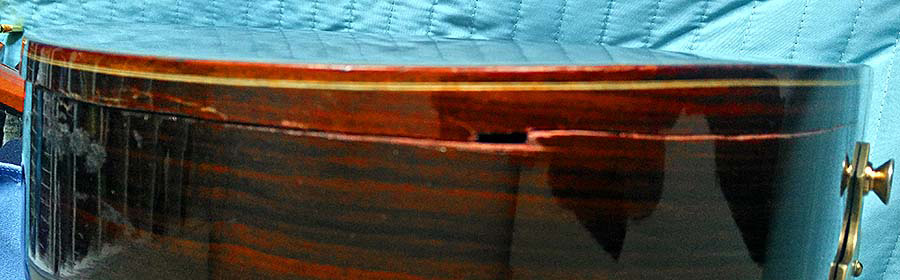
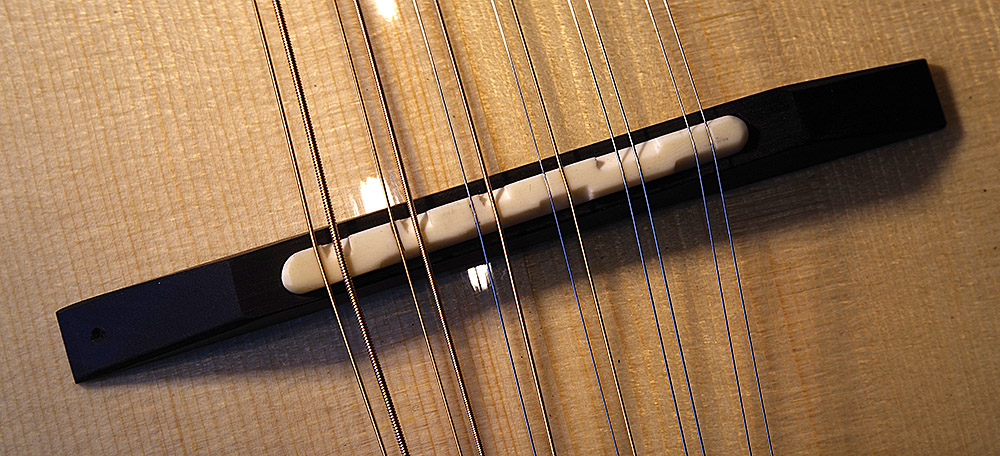
Michael Andersen sent this photo of his damaged mandolin.  He pointed out it’s the second time, the first time was for similar damage on the other side.


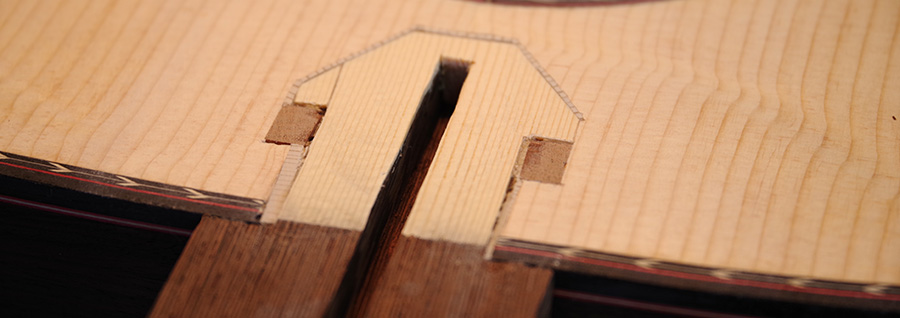
The repair was not unlike the repair I made to Eamon Doorley’s guitar-bouzouki (News, 18 February 2016), though less complicated.  It needed just one very small patch, as shown below below.

When I suggested he should try not to damage this mandolin further, he assured me that next time he went for beer, the mandolin would be in its case.  Problem solved.

27 Jul2017

Impulse purchase

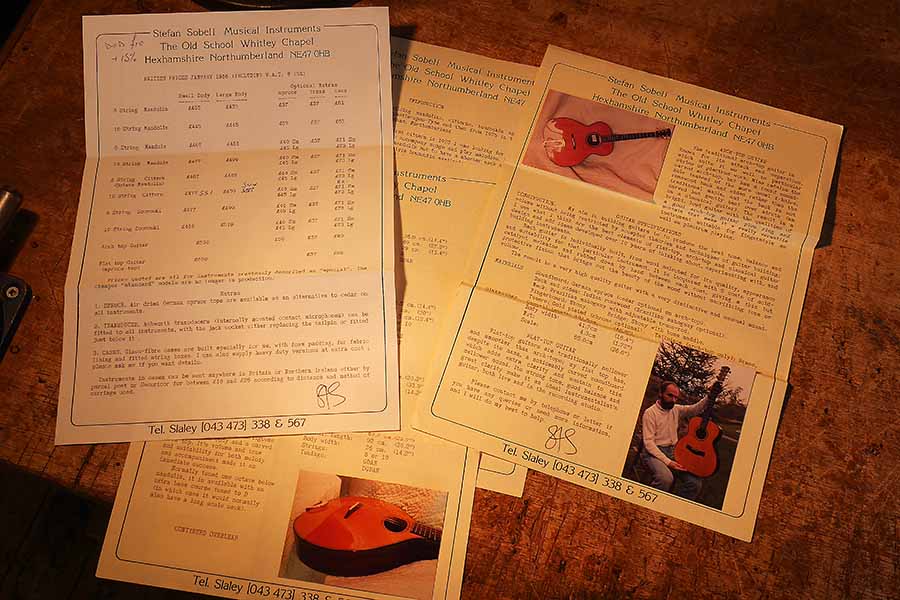
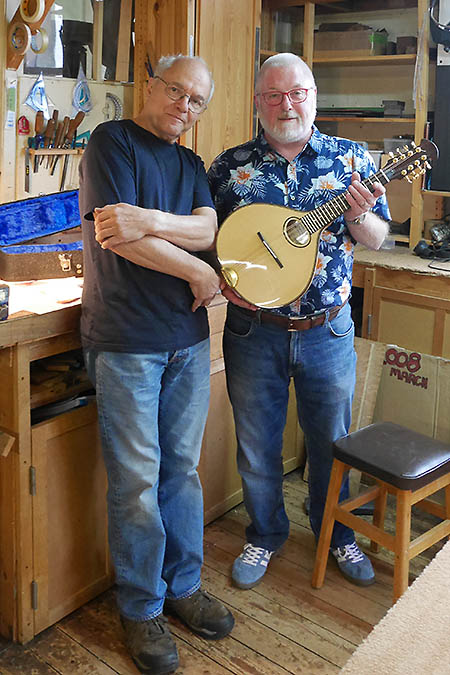
Yesterday Stuart Murray and his wife Jill came to collect Stuart’s mandolin.  Before even looking at it, he took sheets from an envelope to show me.  They were the brochure sheets I’d sent him in 1986, including the price list.  Which showed the price of a small bodied mandolin with spruce top to be £472 including VAT.  It had taken Stuart only 30 years to make up his mind.

By which time prices were a little higher.

Here are some of the brochure sheets.


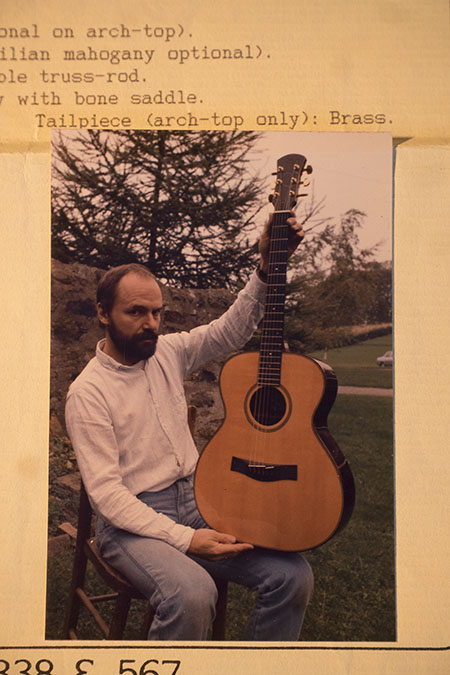
Here are Stuart, Stuart with mandolin maker, and detail of brochure sheet showing mandolin maker 31 plus years ago.


Photo Jill Murray

08 Jul2017

Progress

Neck fitted and ready for truss rod and fingerboard.

30 Jun2017

Next Steinbeck under way

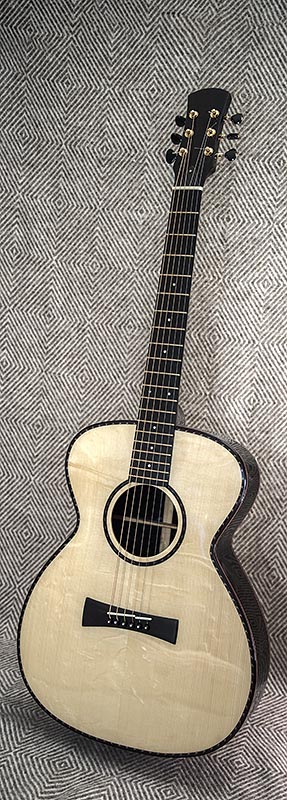
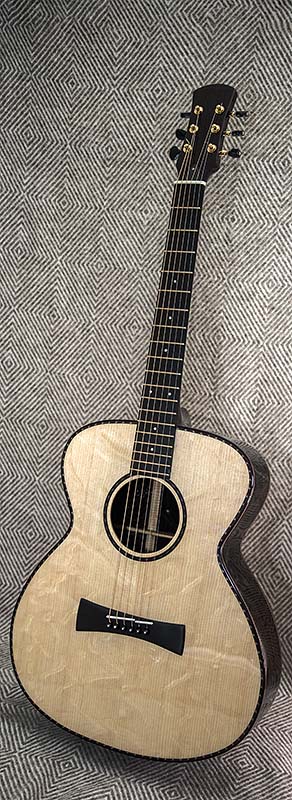
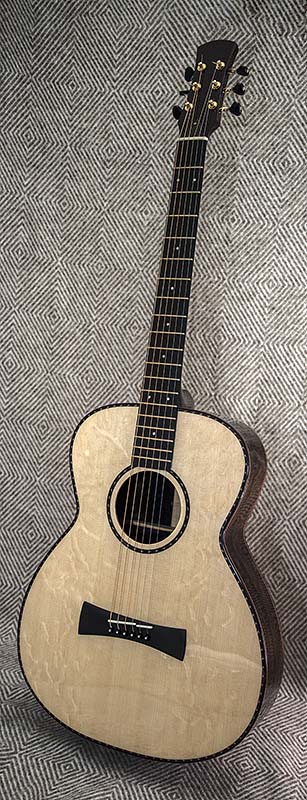
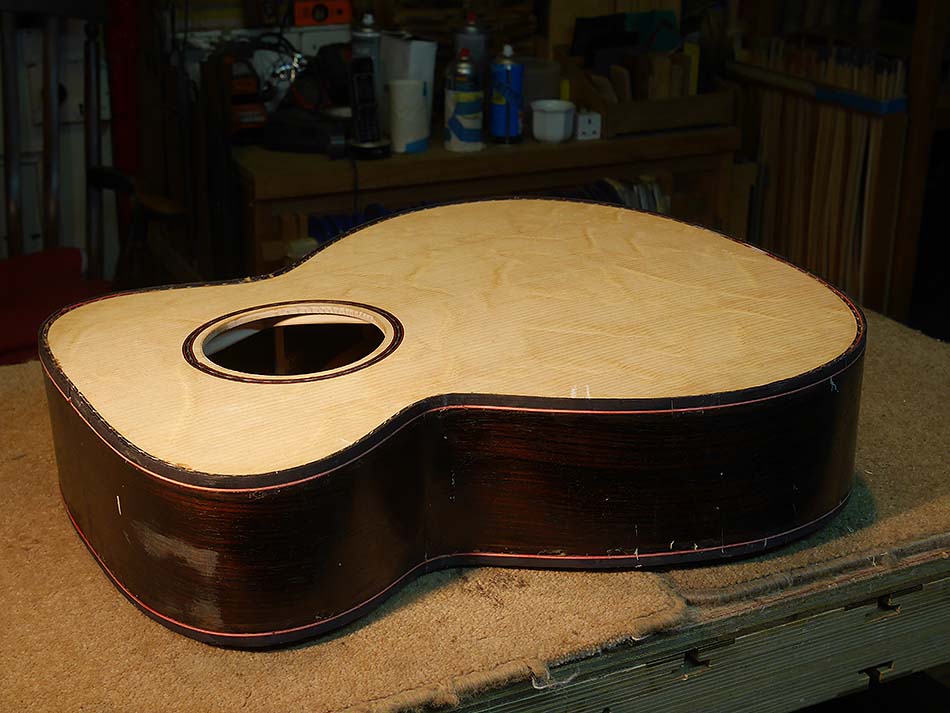
My next Steinbeck is well under way, the back, sides and soundboard built and assembled.  Today I bound the body, and after trimming the binding I’ll be fitting the neck.

The top is Bearclaw Sitka, the back and sides are Malaysian Blackwood from Steve Keys’ Keystone site.

Binding ready to be scraped smooth. Note the soundboard bearclaw figuring.

26 Jun2017

Cracked headstock repair

Guitar headstocks are relatively easily cracked.  This Model 3 (16 fret to the body) guitar belongs to Hajime Takahashi.  He was in Limerick for a rehearsal, went to a restaurant in town, one of the staff offered to keep the instrument for him but knocked it and, as he put it, the head got smashed.

It was the most common damage, just where the head joins the neck.  The head wasn’t right off, but was cracked most of the way through.

Gluing and clamping the crack closed was not difficult.  At this point it would have been possible to sand the area clean and re-finish; glued cracks like this can be very unobtrusive.  But they are also vulnerable to cracking again, usually not in exactly the same place, but a couple of millimetres away from the previous crack.

So having glued the crack, I did more.  I shaved four millimetres from the back of the headstock, and tapered this to nothing about a third of the way up the neck. Then I bent a piece of four millimetre thick mahogany (matching this as closely as possible to the original wood) so that it had the correct bend to match the angle of the head to the neck.

I glued this to the neck, clamping hard, and left it overnight to dry.  Next day I was able to shape the added wood to match the original neck.
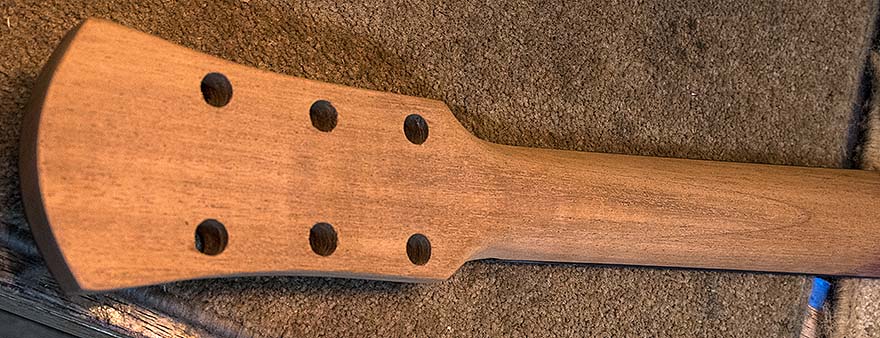
Here the new wood is glued, is shaped to the original neck profile, and the tuner holes drilled through it. The join can be seen best where the new wood feathers into the original wood on the right of the picture.
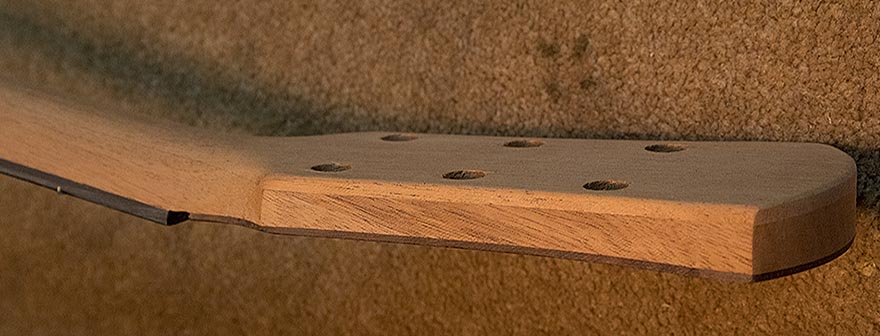
The layer of new wood is clearly visible from the side, mainly because of the different grain direction.

So now there is a layer of solid wood three to four millimetres thick covering the repaired crack, with continuous grain along its length.  This gives the repair great strength.

Next the guitar goes to Dave Wilson who will re-lacquer the neck.

12 Jun2017

Finger healed

Thank you to all who enquired as to the condition of my damaged finger.  Amazing how fast news travels. Happy to report said finger is now fully healed.


31 May2017

A second Steinbeck D guitar

After nearly a year I’m building a second Steinbeck D.  Martin Simpson took the first, and while I hadn’t received an order for a second, I loved it so much I decided to build one.

The combination of depth and ring, and the sweet instrument it became when capoed high up, were the most exciting sounds I’d heard for years; I wanted to hear them again.

As it happened, I started building in the morning and in the afternoon the phone rang.  It now has a home to go to.

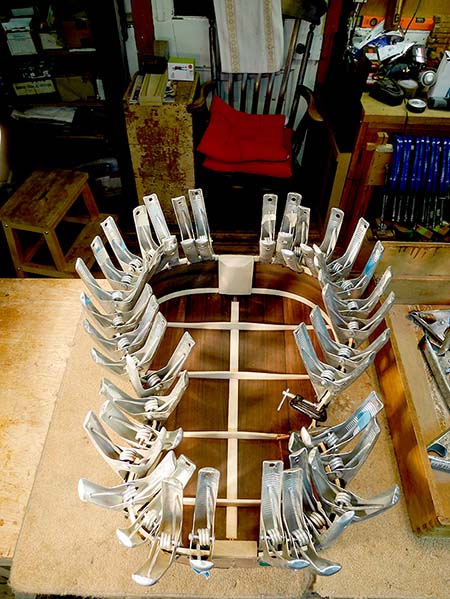
Here are a few progress photos.

Back and sides joined and top lining clamped and gluing
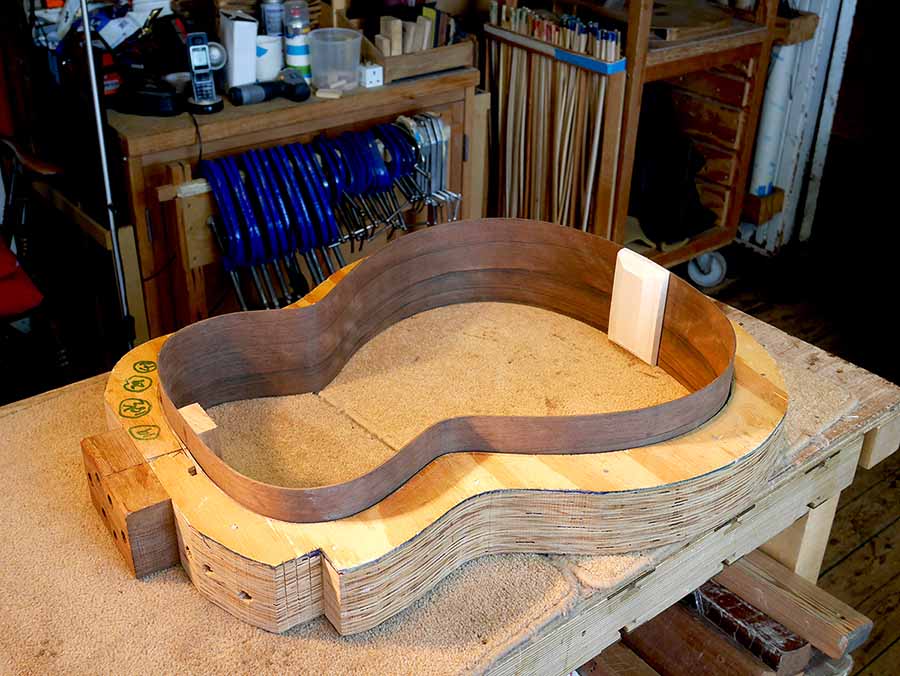
Sides bent to shape and glued to neck and tail blocks
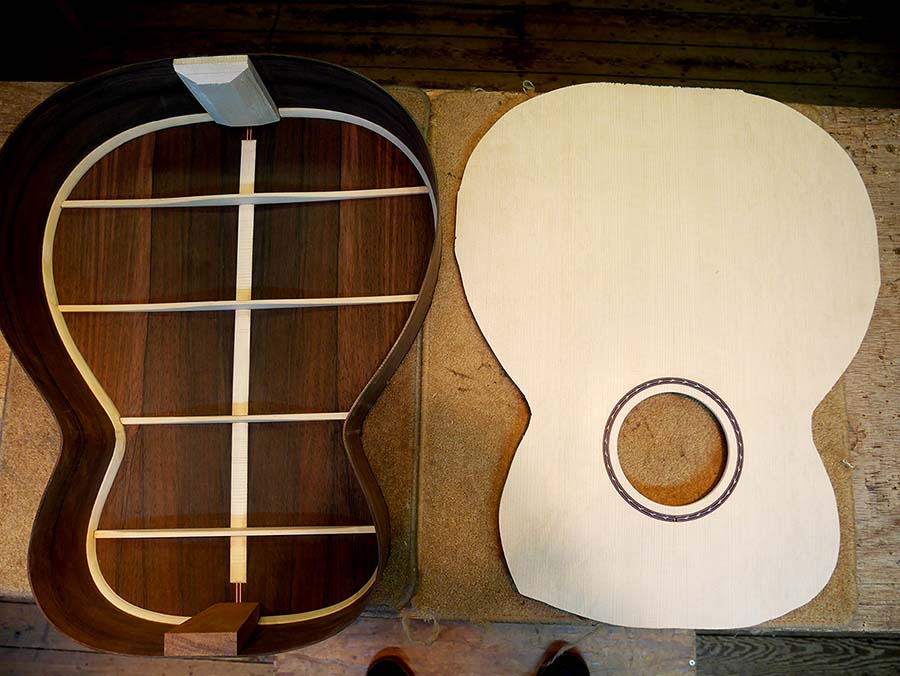
Back and sides and soundboard


26 May2017

Finger end damage

On Wednesday I removed the tip of my left middle finger.  In nearly fifty years of building instruments I’ve had no serious injuries, and perhaps half a dozen very minor ones.  This, fortunately, is very minor.  But it’s a reminder that scalpels are very sharp.

When telling Roger at Fylde guitars of my mishap, he helpfully suggested that when I reach the end of the wood, I should stop cutting.  Thank you Roger. But not relevant in this case, as I had not yet reached the end of the wood.  After slipping with the scalpel, there was an interlude consisting of lots of swearing, bandaging and mopping up blood – amazing how much comes out of a finger, it looked like very nearly an armful.  After which I finished cutting the wood.  I then sanded off a small drop of blood that had landed on the inside of  a soundboard, shouting  ‘Out, out, damn spot’ as I did so.

I was reminded of an article I read many years ago in ‘Fine Woodworking’.  A man making small maple boxes cut his finger and a drop of blood fell onto one of his boxes.  He sanded and sanded, but the blood had soaked into the maple and the stain would not sand out.  Frustrated, he eventually wrote next to it  ‘This is my damn blood’.  And this was the first box to sell.


Taken in the mirror, the damaged finger is in fact on my left hand.

09 Jan2017

12 string arch-top guitar

Early 6 string and recent 12 string guitars
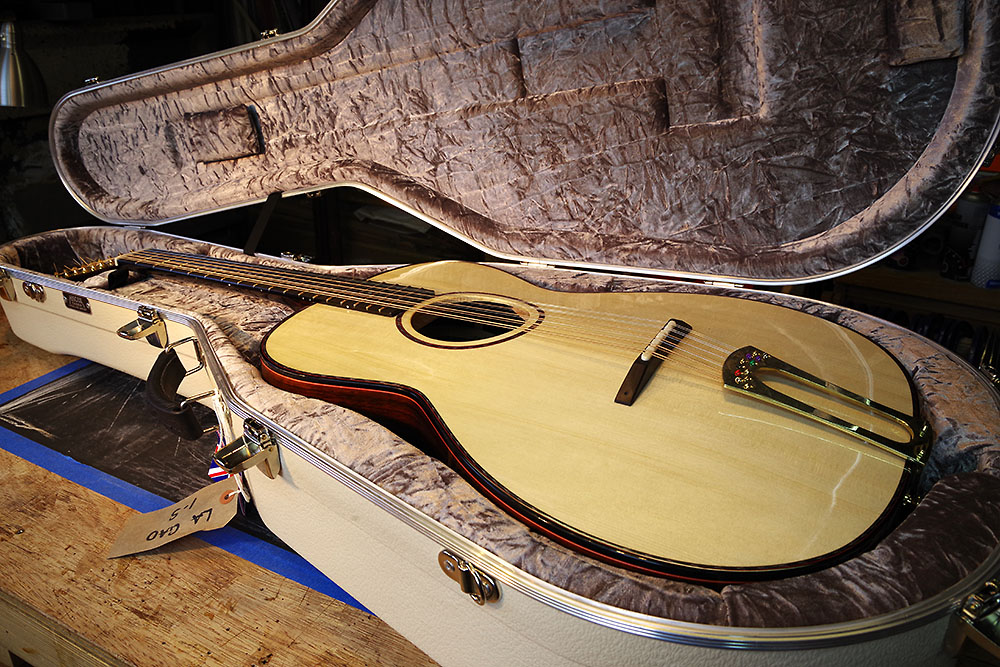
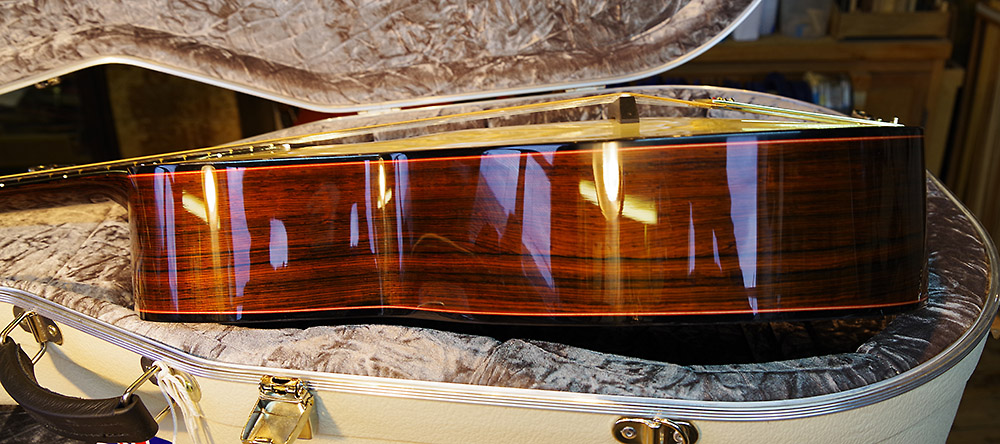
I’ve recently built my first 12 string guitar in a while, quickly followed by a second.  The first is shown above, along with my original 6 string arch-top from 1981.

My 12 string is the same basic guitar I’ve been building for many years, but there have been a few changes.  The trim is black binding with birdsfoot and black/red/black trim round the soundboard and red/white/red purfling round the back and sides.  The bone saddle is now a wider single piece saddle fully compensated for the octave strings.

I’ve always been intrigued by 12 string guitars.  Like many others, I had  cheap one in the 60s (or in my case, a part share in one).  But I couldn’t really get to grips with it and sold my share; it really is a different instrument from the 6 string and has to be approached as such. Good 12 string players can make it sound magical; it seems to me part of the the trick is learning what to leave out as compared with 6 string playing.

In Hiscox Artiste case


Side showing black binding with red/white/red purfling
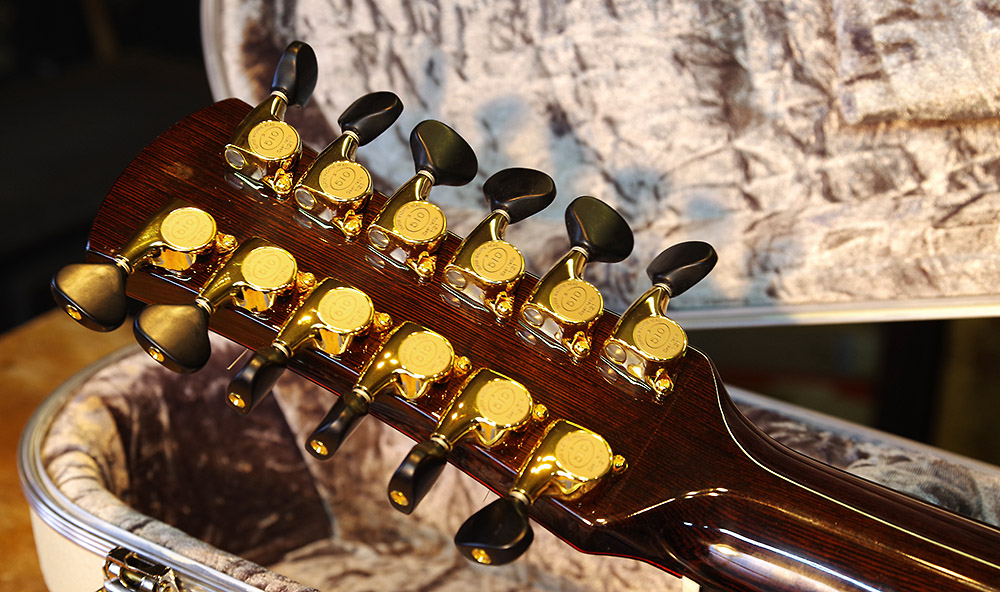
Gotoh 510 tuners – the best


Fully compensated 12 string saddle


29 Jul2016

Steinbeck D finds a home with Martin Simpson

This guitar has been finished a while now, but I loved it, played it every day, and was reluctant to part with it.  However, this last week I’ve traveled round most of the country and came back via Sheffield to visit Martin and see if he wanted to take it.

Martin played it for hours in the evening, and more hours in the morning, beautiful sounds drifting up to me while I was still lying in bed. When I eventually went down, he said ‘it’s astonishing’.

Martin playing it at home in Sheffield.

P1600733 R 1000

‘This is one of the very best guitars you’ve built’ said Martin ‘which means it’s one of the best guitars on the planet’.

The Steinbeck D is a large guitar, built on my Model 2 body, with an extended (28.5″) scale.  It has African Blackwood back and sides, a figured Sitka soundboard, and a Wengé neck, the same woods as the standard smaller bodied Steinbeck.

It’s designed to be tuned one tone below standard, so fitting a capo to the second fret gives standard pitch at standard tuning and standard tension. Played open without a capo it has a magnificent depth of tone; played with a capo higher up it blossoms as a different guitar, bright and ringing.

Very little Martin plays is in standard EADGBE tuning, but each of his tunings becomes a tone lower than on a standard scale guitar.  So the low C he uses in his nearly open C tuning becomes a low B#, immensely low and rich.

P1600729 Rc 1000

Long scale means it’s quite a reach to the nut

P1600746 R 1000

Dylan is well impressed

  • 1
  • ...
  • 13
  • 14
  • 15
  • 16
  • ...
  • 25
  • News
  • Instruments
    • 40th Anniversary Model Guitars
    • Flat Top Guitars
      • Steinbeck Model Guitar
      • Martin Simpson Signature Model
      • New World Guitar
      • Model 4 Dreadnought
      • D Guitar
      • Verona Guitar
    • Arch Top Guitars
      • 6 String Arch-Top guitar
      • Twelve string Arch-top
    • Citterns and octave mandolins
    • Mandolins & Mandola
  • Construction and Design
    • Wood
  • Available now
  • About Us
    • Contact
    • How I started: my first cittern
  • Things they say
  • Order
  • Tonewood for sale
    • Indian rosewood for sale
    • Brazilian rosewood for sale